The Role of Power Electronics in Modern Energy Infrastructure

Efficiency, controllability and power quality increasingly depend on converter-based systems. This insight examines how power electronics connects grids, HVDC, hydrogen, data centres, BESS and renewable generation into stable and flexible energy infrastructures.

Executive Summary · Key Figures · Standards · Recommended Packages

Executive Summary

  • Power electronics has developed from a component technology into a system-defining layer of modern energy infrastructure.
  • Converters enable efficient energy conversion, bidirectional power flow, fast control and the integration of highly dynamic sources and loads.
  • The same technology that increases flexibility also increases system complexity through controls, harmonics, interactions, protection challenges and semiconductor-dependent reliability.
  • A coordinated engineering approach is therefore required across equipment design, grid studies, power quality, protection, thermal management, control and lifecycle strategy.

Key System Dimensions

Core functionConversion · Control · Coupling
Main benefitsEfficiency · Flexibility · Dynamics
Main risksHarmonics · Resonance · Control interaction
Engineering focusGrid code · PQ · Protection · Thermal design

Technical System View

Renewables
BESS
HVDC & Grids
Power Electronics
Hydrogen / Electrolysis
Data Centres

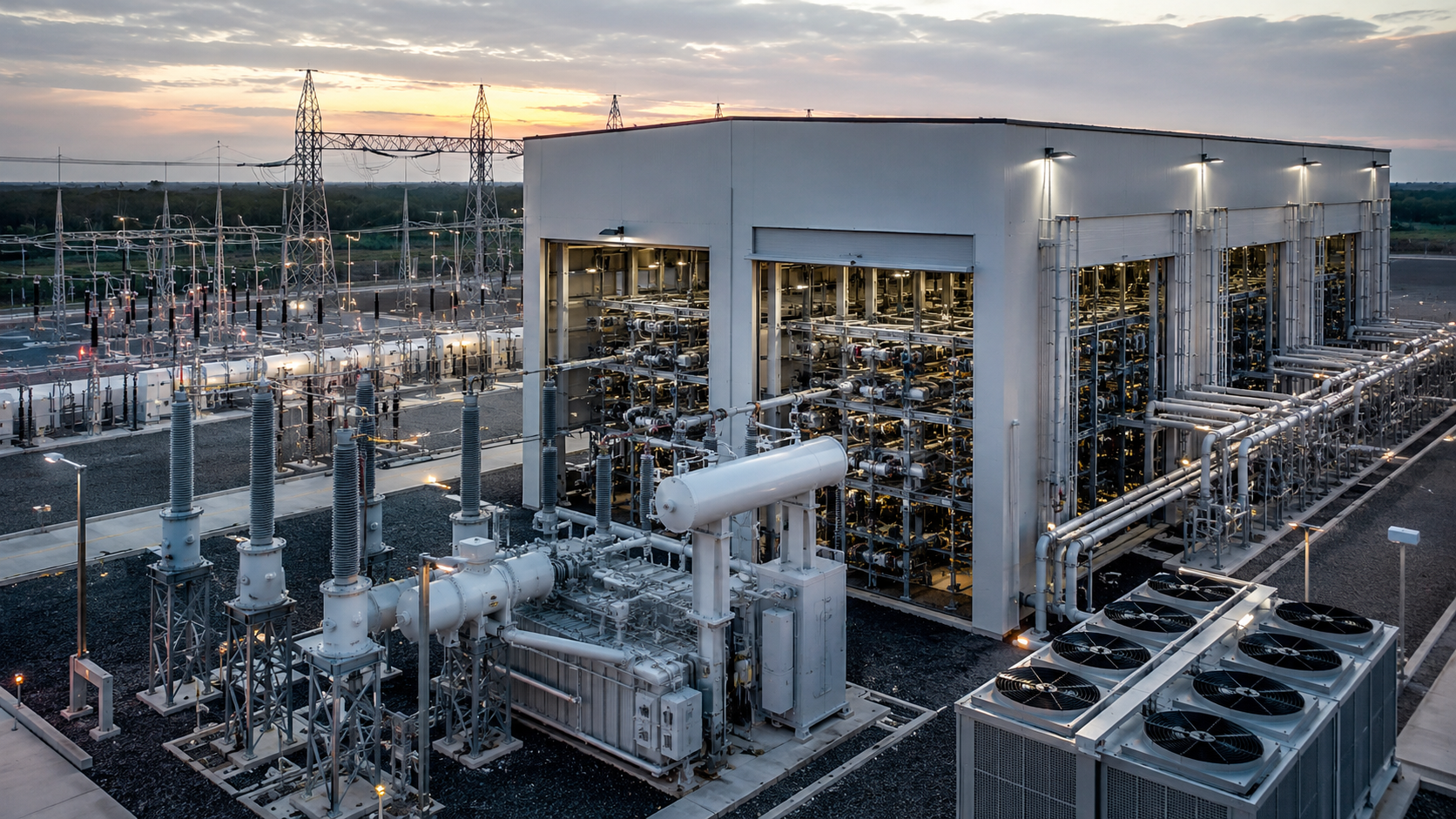
Power electronics forms the controllable interface between generation, storage, transmission and high-performance loads.

Technical Discussion

1. Efficiency and controllability

Modern converter systems reduce conversion losses, enable variable-speed operation, optimize operating points and support bidirectional power flows. Their value is not limited to component efficiency: they allow entire systems to follow demand, generation availability and grid constraints dynamically.

2. Complexity and system interaction

Converter-dominated infrastructure behaves differently from conventional electromechanical systems. Fast control loops, PLL behaviour, weak-grid conditions, filter resonances, multiple vendors and proprietary control functions can create interactions that are not visible in isolated equipment tests.

3. Power quality and grid stability

Power electronics can actively improve voltage support, reactive power control, flicker behaviour and frequency response. At the same time, switching harmonics, interharmonics, resonance amplification and rapid set-point changes require coordinated studies, measurement concepts and filter design.

4. Electrical grids and HVDC

FACTS, STATCOM, grid-forming converters and HVDC stations extend the controllability of transmission and distribution systems. They enable long-distance power transfer, asynchronous system coupling, offshore integration and dynamic voltage support, but require detailed coordination of protection, controls and grid-code performance.

5. Hydrogen and electrolysis

Large electrolysers are converter-fed, highly controllable industrial loads. Their power electronics determine ramp rates, efficiency, reactive power behaviour and grid impact. Connection concepts must therefore consider harmonics, transformer loading, voltage fluctuations, redundancy and interaction with local renewable generation.

6. Data centres and critical power

UPS systems, rectifiers, inverters and static transfer switches form the electrical backbone of high-availability data centres. Efficiency gains must be balanced against fault tolerance, bypass design, selectivity, short-circuit contribution, harmonics and the behaviour of parallel converter systems.

7. BESS and renewable integration

Battery PCS and renewable inverters are key interfaces between DC sources and AC networks. They support active and reactive power control, frequency services, voltage regulation, black start and grid-forming operation. Their effectiveness depends on coordinated EMS, protection, thermal design, communication and grid-study assumptions.
Engineering Priorities

  • System-level efficiency instead of isolated component efficiency
  • Harmonic, impedance and resonance studies
  • Control interaction and weak-grid assessment
  • Protection and fault behaviour of converter-based resources
  • Thermal design, cooling and semiconductor lifetime
  • Cybersecure communication and coordinated control hierarchy

References / Standards

IEC 61000 seriesElectromagnetic compatibility and power quality
IEC 62477-1Safety requirements for power electronic converter systems
IEC 61800 seriesAdjustable speed electrical power drive systems
IEC 62751 seriesPower losses in voltage sourced converter valves for HVDC
IEEE 519Harmonic control in electric power systems
Applicable grid codesConnection behaviour, fault ride-through and reactive power

Recommended iGRANEX Packages

  • Power Quality & Harmonic Assessment
  • Converter Integration & Grid Compliance Study
  • BESS / Renewable Interface Engineering
  • Critical Power Reliability Review
  • Technical Specification & Supplier Clarification

Document Information

Document TypeTechnical Insight Paper
Estimated Read Time12 min
Prepared ByiGRANEX
FocusInsight 7 / POWER ELECTRONICS

Applicable Solution Lines

  • Grid & Power Systems Engineering
  • Renewable Energy & BESS Engineering
  • Critical Power Reliability Solutions
  • Low Voltage & Automation

Why this matters

Power electronics is now one of the decisive interfaces between energy generation, networks, storage and critical loads. Its correct integration determines efficiency, stability, availability and long-term asset value.

Turn insight into project action.

Use this topic as a starting point for project definition, engineering scope clarification or a specific iGRANEX package configuration.

Discuss this topic with iGRANEX →